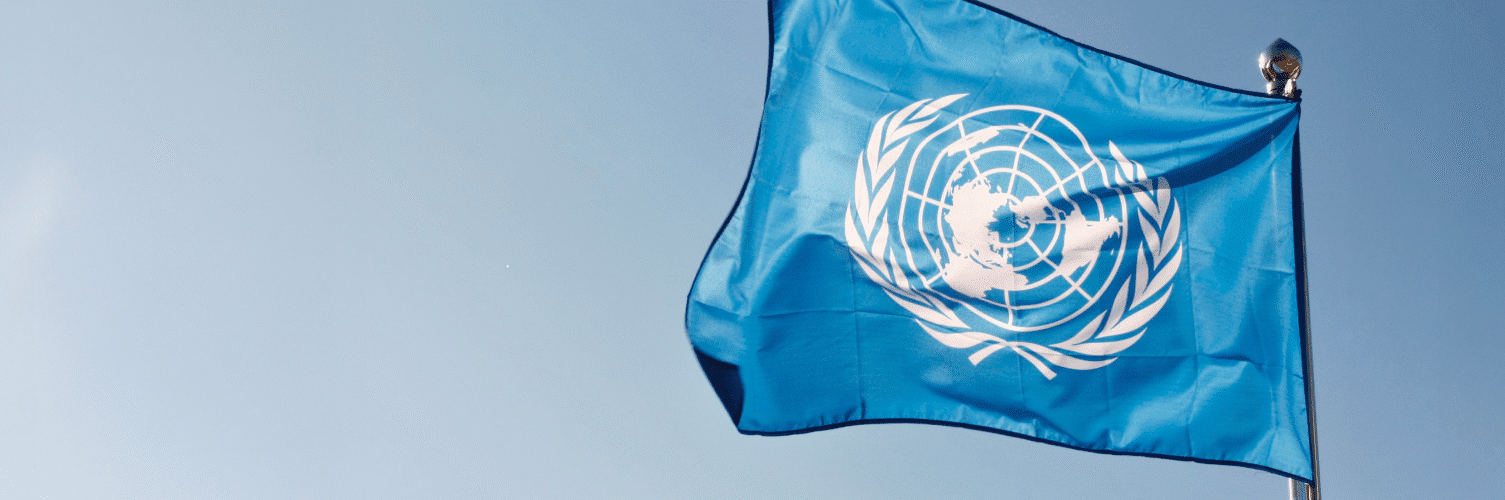
At this year’s United Nations General Assembly (UNGA), the International Organization for Migration (IOM) convened its Assembly to place migration at the heart of global impact with Global Donors Forum and Muslim Impact Forum. The Assembly underscored that human mobility is not a marginal concern but a defining feature of international development, security, and diplomacy in the twenty-first century.

Leaders highlighted the scale of the challenge: millions displaced by conflict, climate shocks, and economic disruption, with frontline states in the Global South bearing the heaviest burdens. At the same time, the Assembly made clear that migration must be reframed as an opportunity for innovation, inclusive growth, and cooperation – rather than a crisis to be contained.
Key Themes Raised
- Climate and Displacement: Calls to integrate migration into adaptation and resilience strategies, recognising that climate change will drive unprecedented levels of mobility.
- Dignity and Protection: Strengthening frameworks to defend migrants against exploitation, trafficking, and rights violations.
- Shared Responsibility: Building equitable funding models to ensure frontline states and host communities are not left isolated.
Modern Slavery and Migration
One of the most urgent issues raised was the intersection of migration and modern slavery. Migrants are among the most vulnerable to forced labour and trafficking, with IOM emphasising that protection mechanisms must be central to any global migration framework.
The Muslim Impact Forum (MIF) has made this challenge a priority through its Freedom Fund, which re-activates the rarely-utilised zakat category of riqab (the freeing of captives) to support anti-slavery initiatives. This approach demonstrates how faith-rooted philanthropy can directly address one of the darkest consequences of unmanaged migration.
Islamic Philanthropy’s Role
Islamic philanthropy, with its long tradition of social protection through zakat and waqf, is uniquely positioned to contribute to global migration governance. By aligning resources with the needs identified at the IOM Assembly – climate resilience, migrant protection, and anti-slavery efforts – Muslim institutions can bring both moral authority and practical solutions to the table.
Towards Coordinated Leadership
The Assembly reinforced IOM’s role as a bridge between governments, humanitarian agencies, and civil society. For Muslim leaders, philanthropists, and organisations, the message is clear: engagement must move from the periphery to the centre of the debate. Values-driven initiatives such as those advanced by MIF show how Islamic philanthropy can be mobilised to meet systemic global challenges with vision and impact.